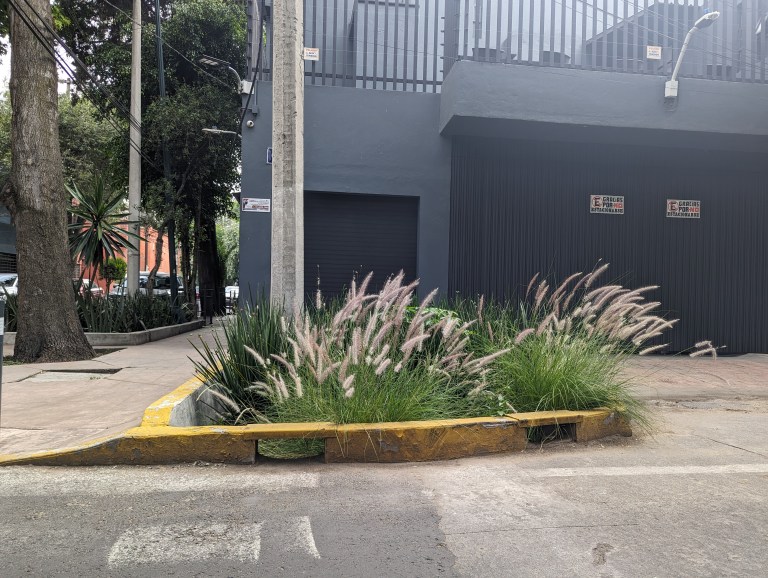
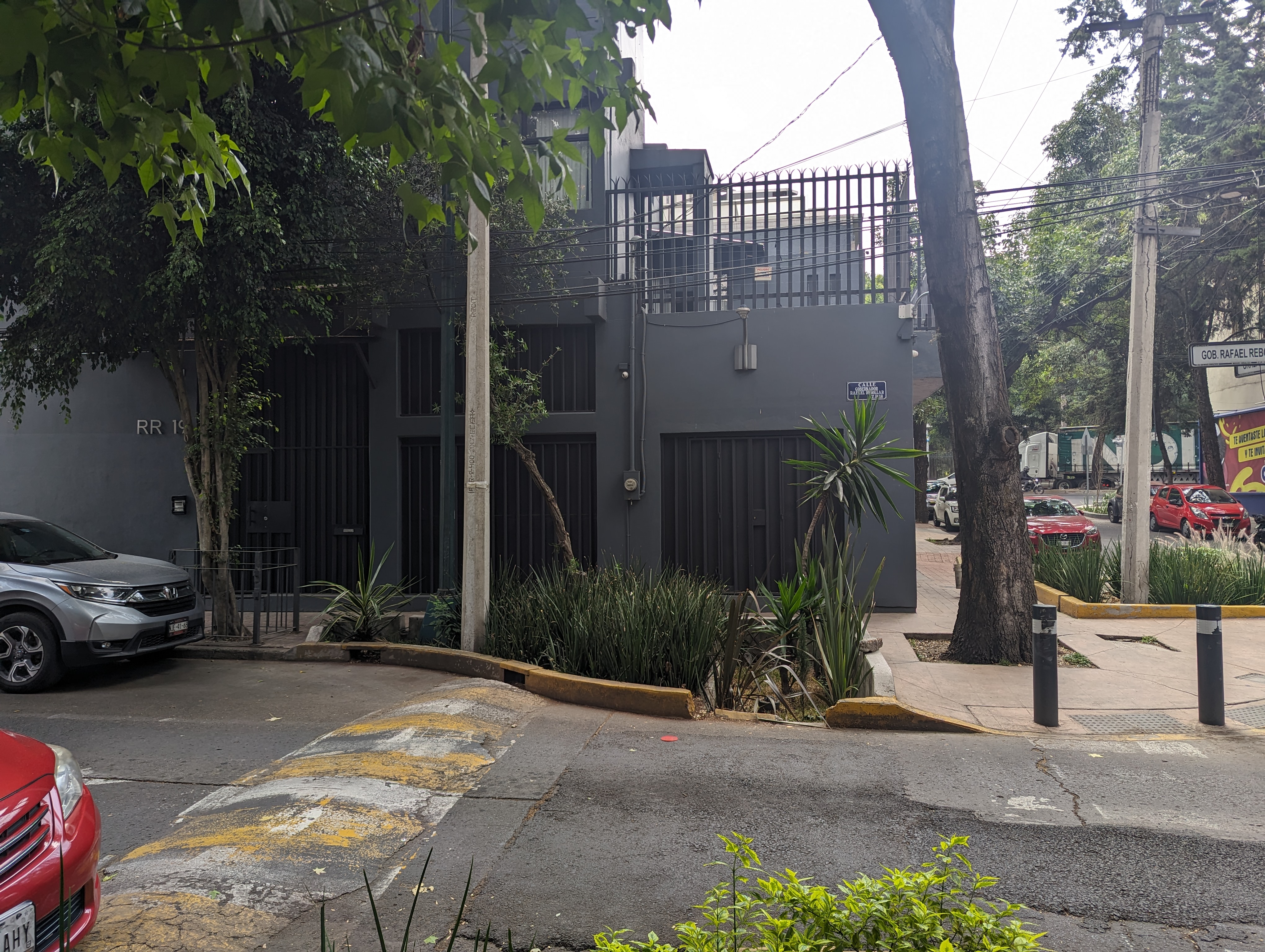
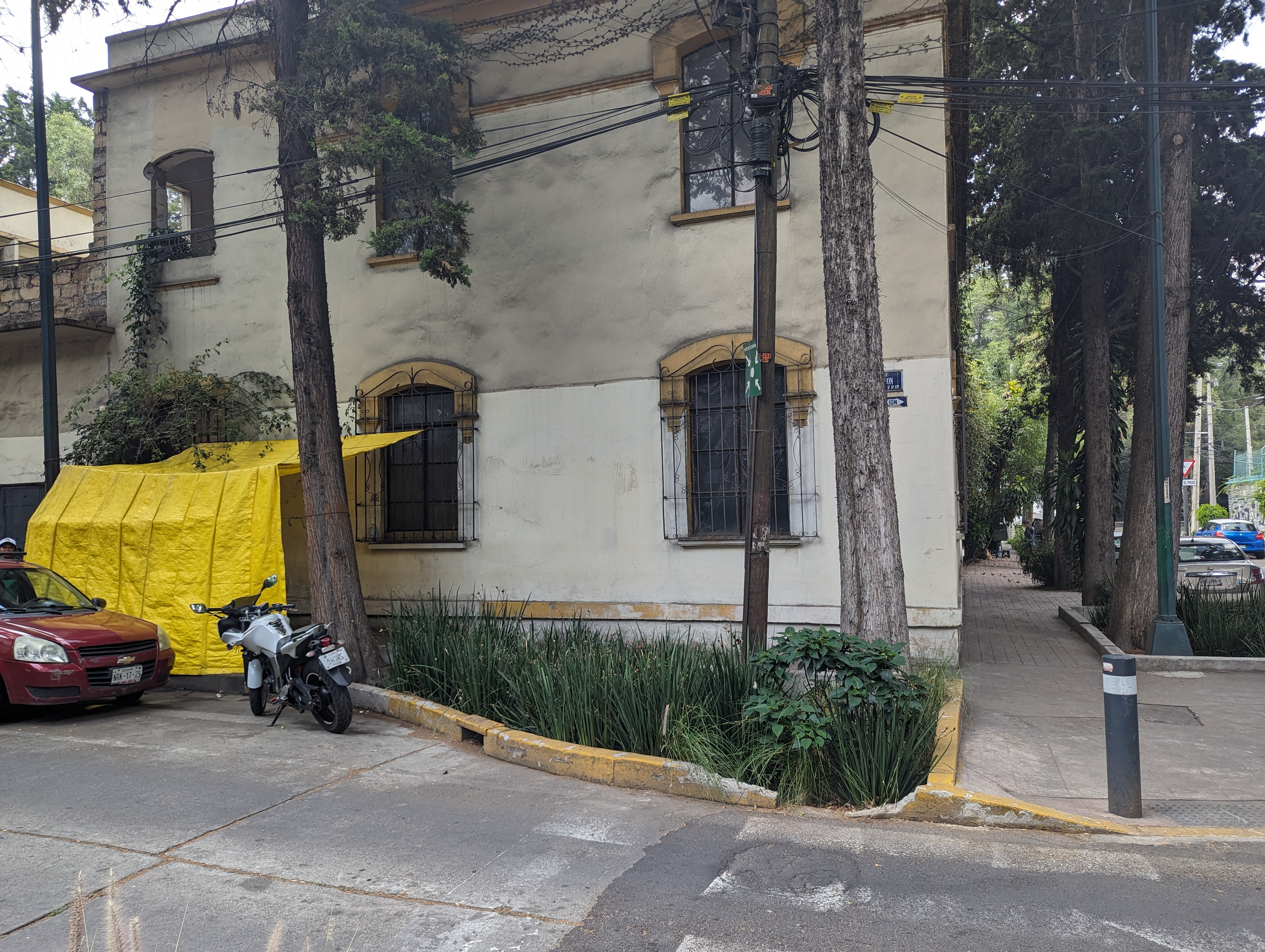
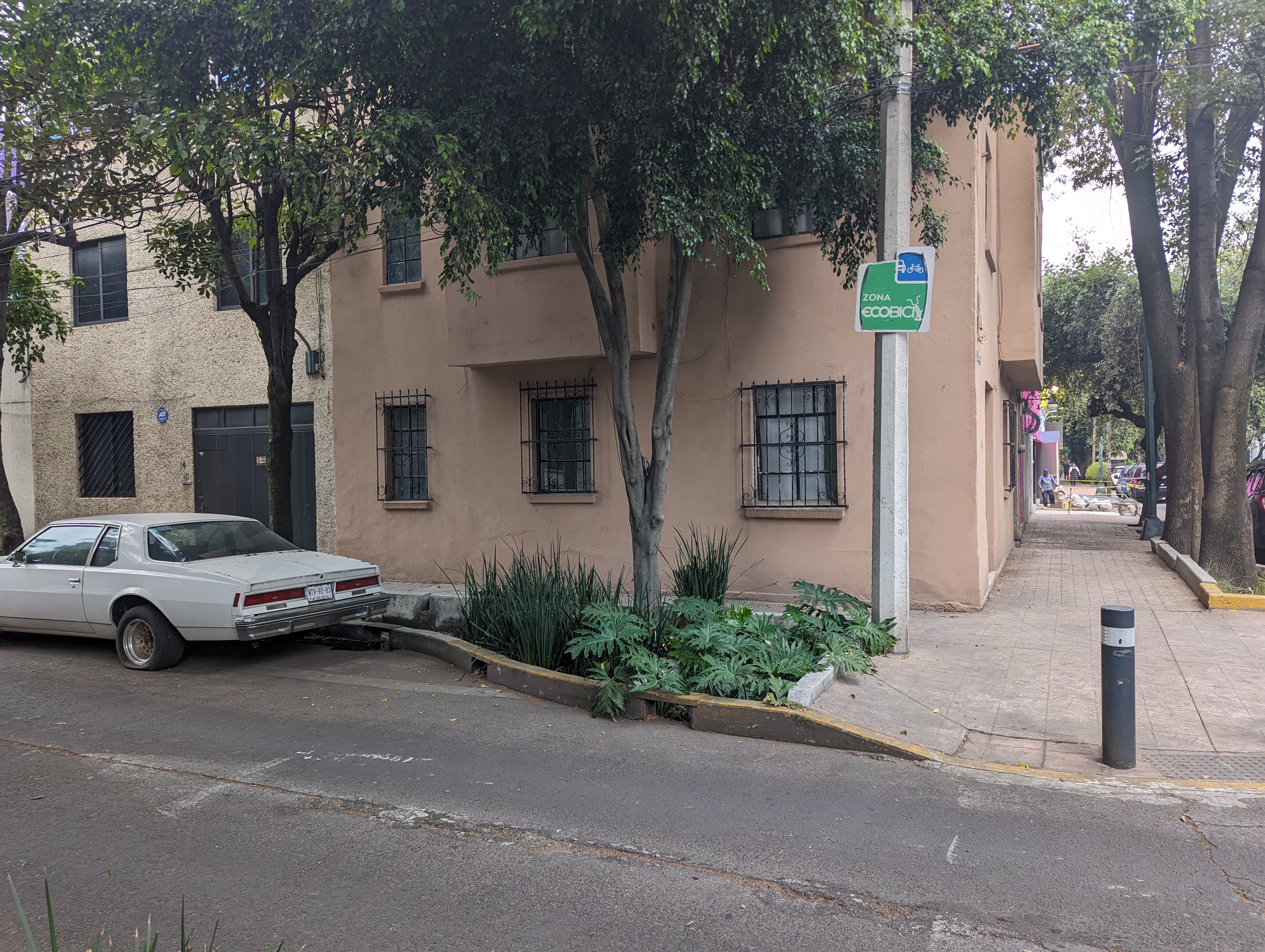
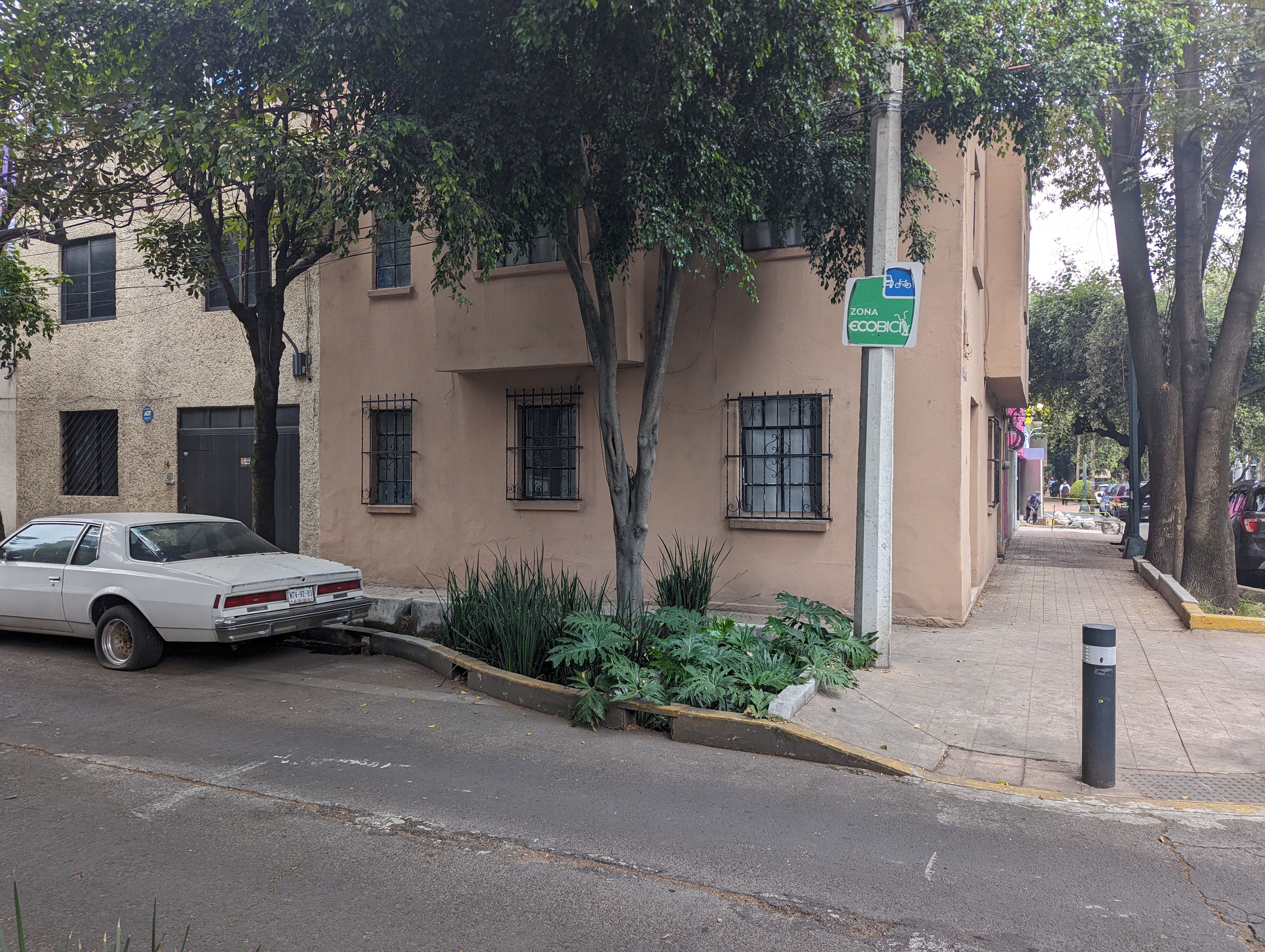
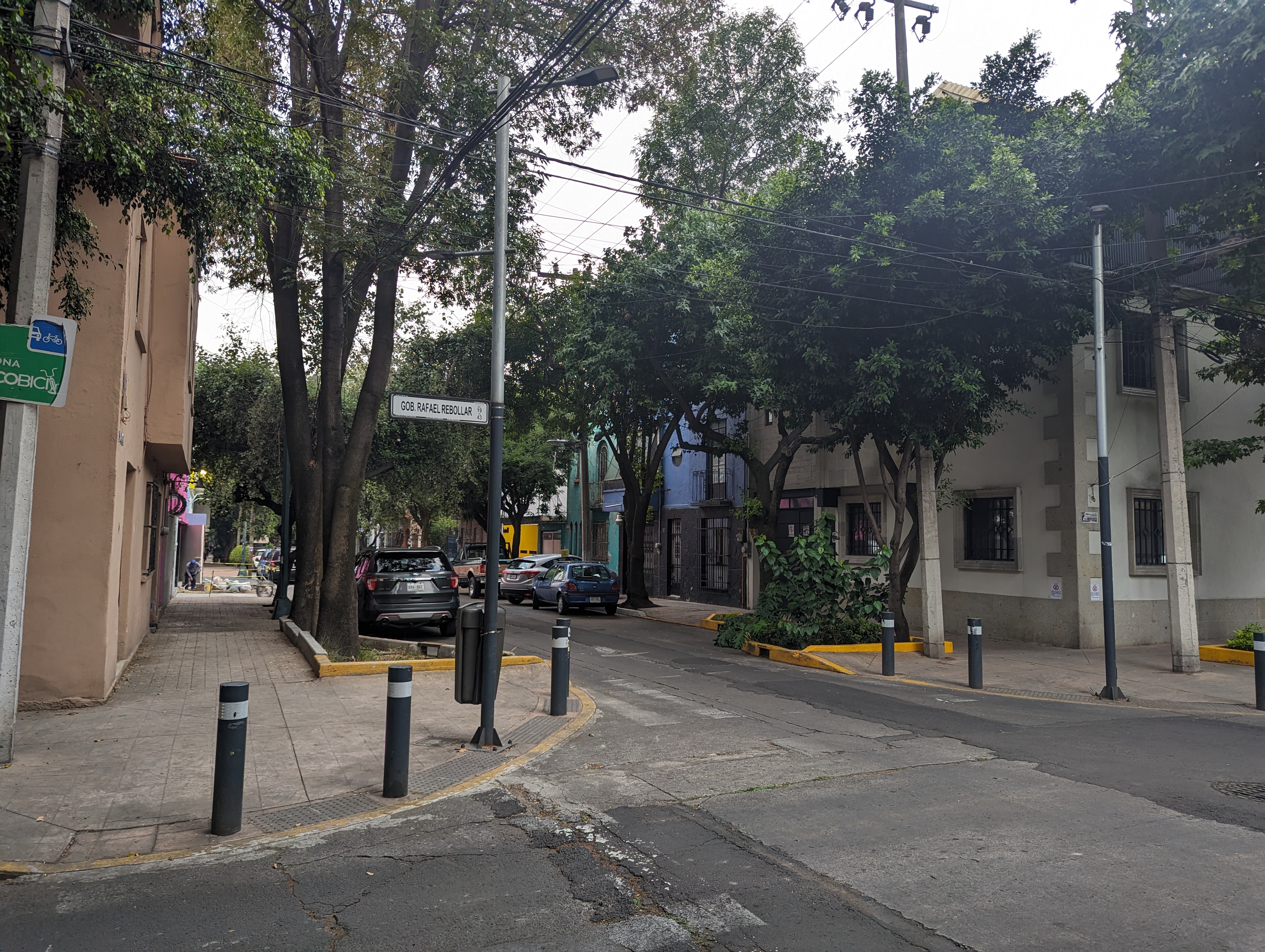
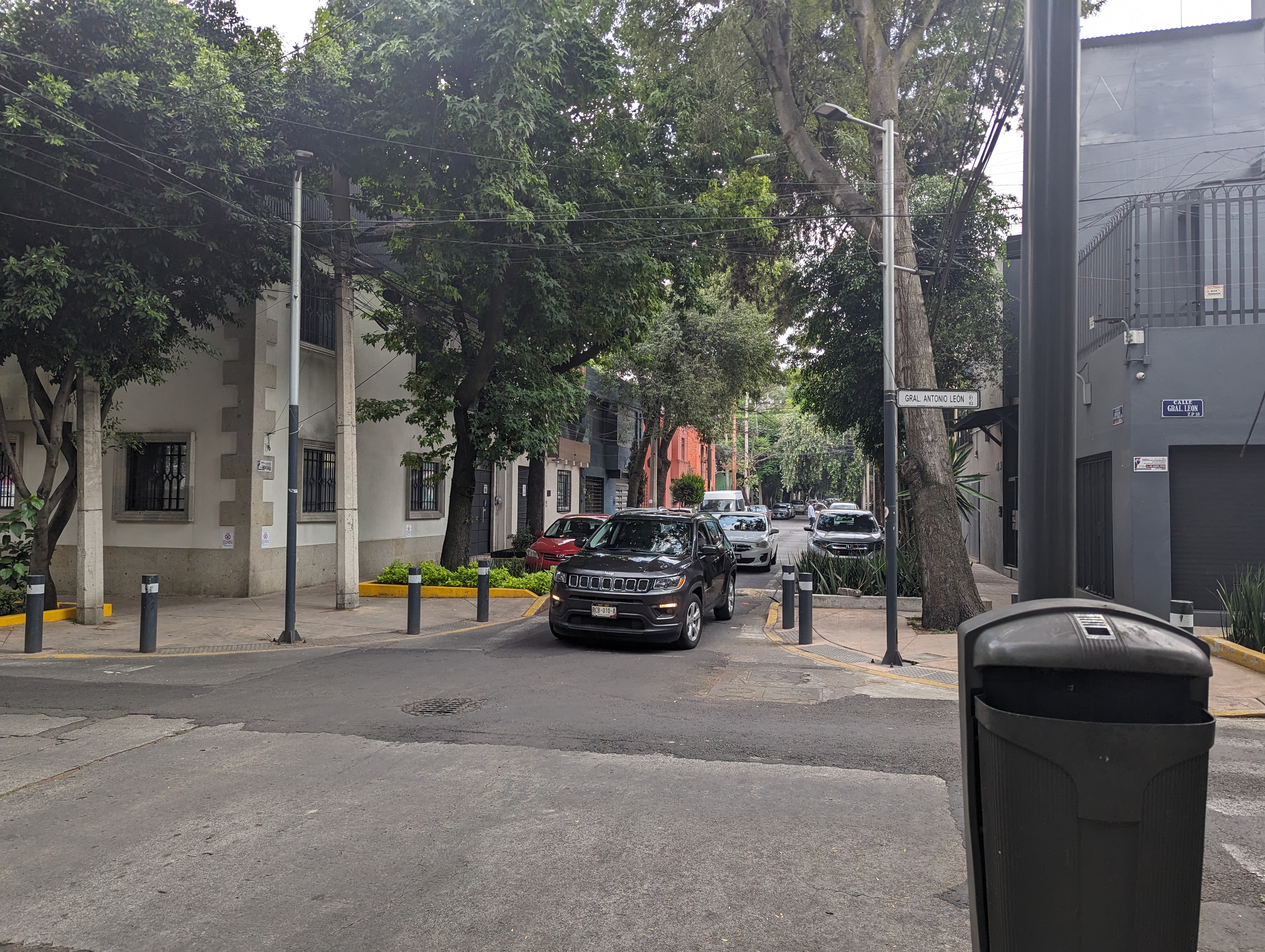
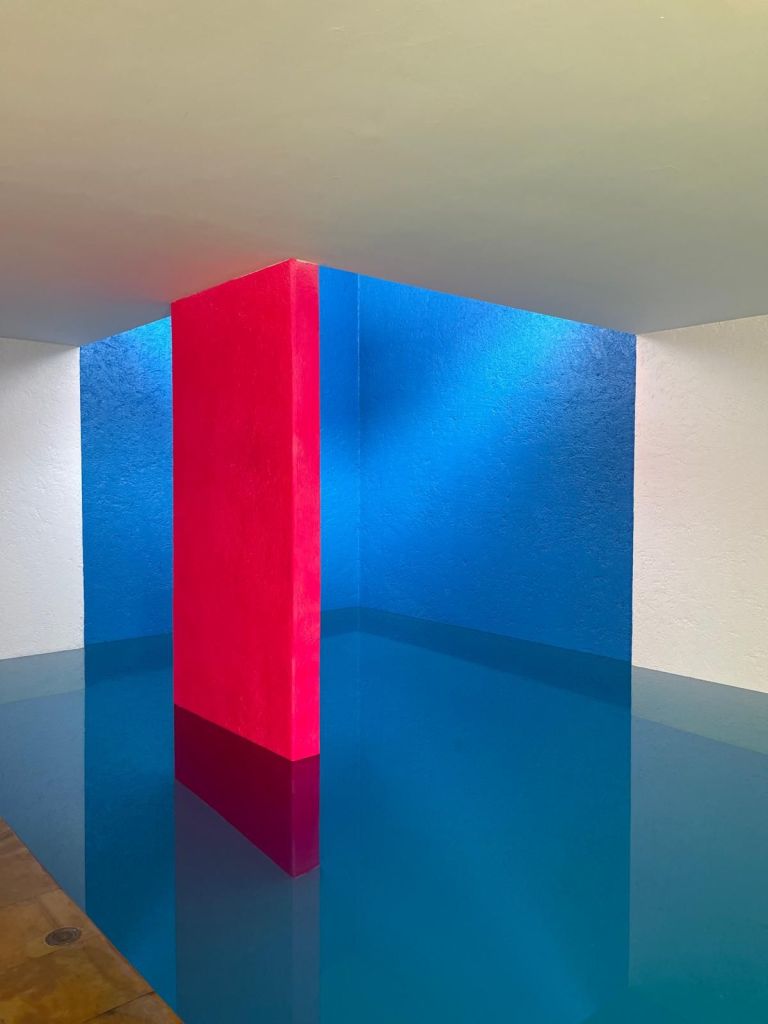
On a recent (though not recent enough!) trip to Mexico City, I stopped outside Casa Gilardi — the iconic Luis Barragán house in Condesa — and couldn’t help noticing the series of beautifully established rain gardens lining the street. Metal inlet plates set into the kerb, concrete check dams guiding flow, and subtle overflow structures all working together to manage stormwater in a neighbourhood better known for colour, culture, and architecture than drainage innovation.
These small interventions are easy to walk past without noticing, but in Mexico City they carry a much deeper significance. The city has always had an intimate, complicated relationship with water. It was originally built on a vast basin of lakes and wetlands with no natural river outlet — a landscape where water had to be absorbed or evaporated rather than drained away. The Aztecs adapted to this environment brilliantly, developing chinampas, floating agricultural islands woven from reeds, that turned hydrology into ecology.
Colonial engineering later attempted to fight the landscape rather than work with it. Wetlands were drained, lakes filled, and water diverted away from the basin entirely. Over centuries, groundwater extraction and the loss of natural infiltration have caused Mexico City to sink by up to 25 cm per year — one of the most extreme cases of urban subsidence in the world.
This is why modern blue–green infrastructure, like the rain gardens in Condesa, feels both humble and profound. They help water soak back into the ground, slow local flooding, and contribute to the long process of rebalancing the city’s water cycle. They’re small in scale but huge in meaning — reminders that today’s solutions often reconnect us to the knowledge embedded in the landscape long before engineering took over.


Seeing SuDS embedded so seamlessly in Condesa — in front of one of Barragán’s masterpieces, no less — is a powerful example of how cities can restore resilience through everyday, street-level design.
A handful of rain gardens won’t solve Mexico City’s water challenges alone, but they represent a shift: working with water, not against it. Just as the chinampas once blended built form and ecology, these contemporary interventions hint at how the city can find balance again.